
In an art market flooded with so much noise, it’s easy to overlook the work of Lawrence Carroll. The Melbourne-born American artist, who died in 2019, created works that fill a room with silence and inspire contemplation. They encourage slowness and consideration in how we approach and understand painting. ‘Whispers of the Soul’, Carroll’s first Hong Kong exhibition, at Villepin Gallery, features a selection of the artist’s sculptural canvases, photographs and sculptures. Curated by Olivier Kaeppelin and Arthur de Villepin, in collaboration with Carroll’s wife, Lucy Jones Carroll, the exhibition juxtaposes Carroll’s works with a scattering of others by Cy Twombly, Giorgio Morandi, Giorgio de Chirico and François Halard – artists who inspired Carroll and whom the artist admired. This curation enhances and creates dialogue between Carroll’s own works and the supporting artists. But make no mistake, Carroll’s works are the stars here.


Throughout much of his painting career – putting aside his album cover artwork for American heavy metal band Slayer – Carroll used a restrained, muted colour palette of whites and blanched colours that became a signature, repetitiously exploring their subtle variations, nuances and complexities over the decades. On the surface, his paintings appear to owe much to the minimalist movement, but Carroll’s work is nothing like the cool, detached, slick perfection of the work of Donald Judd, whom the artist admired, or Robert Ryman, with whom Carroll was exhibited in 1989 as one of nine young American artists in Harald Szeemann’s international exhibition Einleuchten at the Deichtorhallen in Hamburg, Germany. Carroll’s white is not that of a purist or perfectionist, a white on white. Most of his paintings are off-white, dirtied and stained with streaks of other colours and flecks of dust, iron, wood or whatever else happened to be in the studio the day the painting was created. In this way, the canvas is like a page of a journal – of which Carroll was a prodigious writer – containing traces of the artist’s day and activities. It is a white that encompasses everything, containing emotions, memories and experiences.
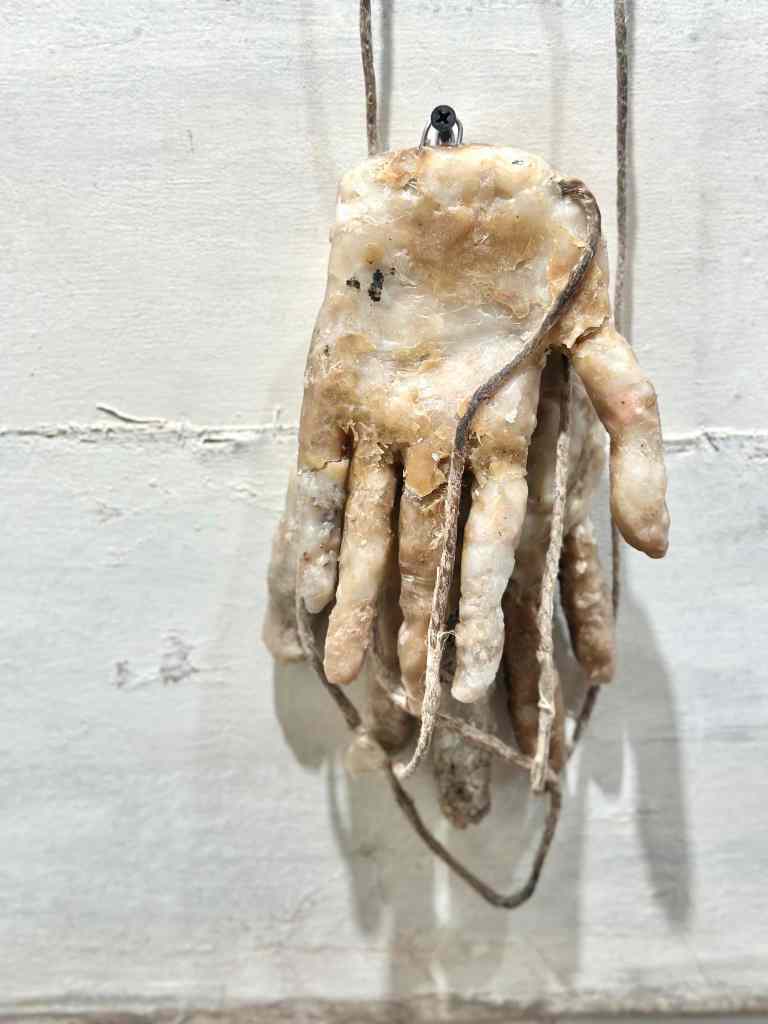
The paintings’ surfaces are made up of many stitched-together pieces of canvas or even patterned fabric, sometimes stapled or glued atop other pieces onto the wooden frame. Often the works were assembled from found materials, a nod to the arte povera movement, although Carroll’s visual language was formed before he knew much about that. Paintings are taken apart and reassembled, the surface layered with materials and gestures, reworked and textured. They may look haphazard, slapdash, but Carroll’s works belie the slowness, solitude and concentration that are required to build them. Nothing is random. The artist uses household paint, fragments of canvas and cloth layered with oil, wax and dust to create them, sometimes also incorporating objects like flowers, or a wax mould of his hands in Untitled (hand painting) (2014), hanging like a macabre fleshy trophy from the top of the canvas’s frame. Paint is used to both reveal and conceal. Traces of fabric print, stitches and fragments of sentences are visible beneath the layers of paint and wax, like a wall stripped of years’ worth of paint to reveal an old fresco beneath.

Carroll’s works embrace imperfection and the human hand, but they also highlight the medium itself – the canvas and the stretcher become the art object, rather than just the material through which to express art. The three-dimensionality of an object or sculpture is brought together with the two-dimensionality of painting to explore their relationship. Large, clunky paintings jut out from the wall like boxes, sometimes at a human scale. One needs to walk around these works, to interact with them and participate in the creation of their narrative. These sculptural paintings draw the viewer in with their intimacy and detail, materiality and texture, and scale of the support and form. The artist’s hand is visible in the uneven, hand-hewn, wooden stretchers, the stitching and creases of the fabric and canvas.
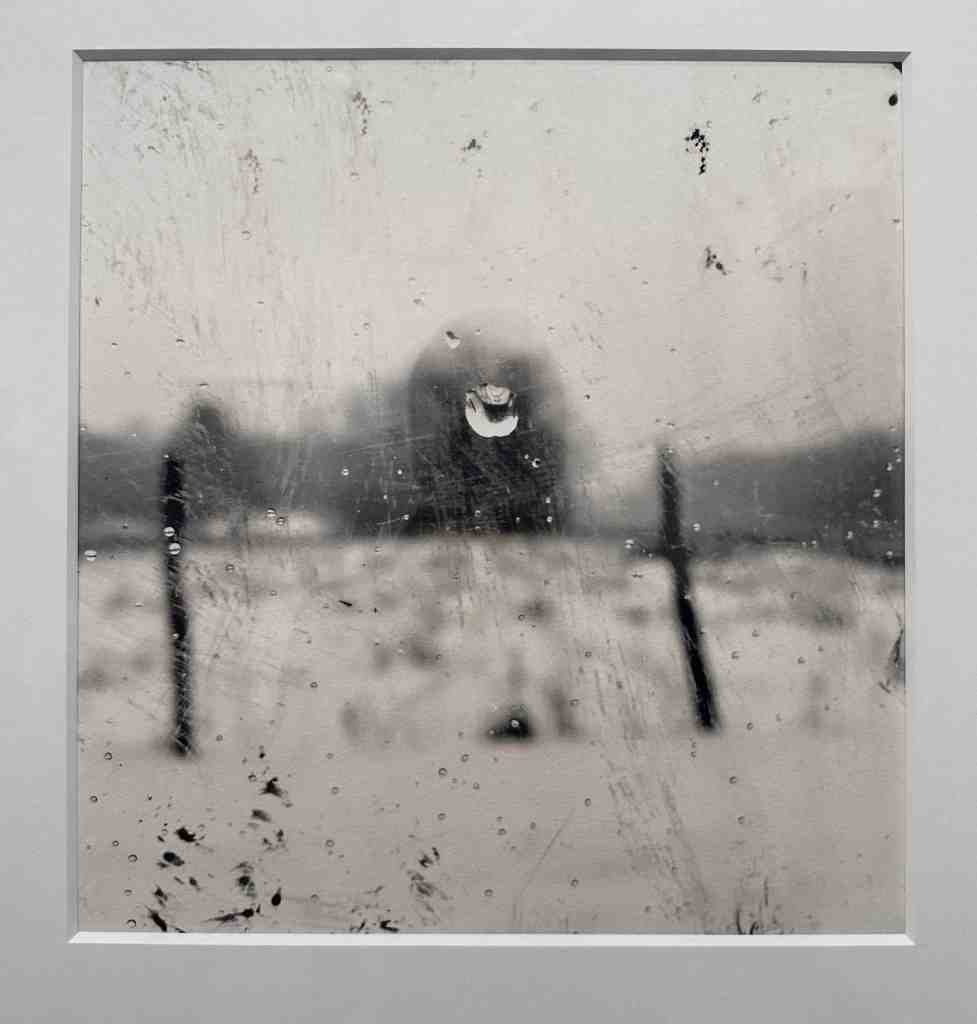
Getting closer to the paintings, perhaps you notice threads from a frayed piece of canvas, uneven staples holding fabric together, or marks left by the artist’s hand or paintbrush. The surface of his sculptural paintings bear the patina of the passage of time – such as the yellowing of wax of Untitled (La Città) (1998). They look a little worn and tattered. Other paintings created over the course of Carroll’s career contain Perspex boxes inlaid into the wood and canvas, filled with dried flowers, leaves or old shoes, like nostalgic mementos from special moments. Light in the room creates another dimension of time passing, as shadow and light play across the surface of the paintings, changing the colours with the shifting sun. The paintings are like characters or people, changed and affected by their environments and the passage of time.
Carroll’s works quietly and elegiacally capture the human condition, with its layers and fragments of memories, experiences and emotions that we each retrieve and sift through over the course of our lives. But while they are sorrowful, mourning the loss, decay and passing of life and time, they are also joyous, revelling in the beauty of a fleeting moment, of change and of just being.

Whispers of the Soul / Villepin Gallery / Hong Kong / Nov 26, 2023 – Feb, 2024
First published in Artomity, January 5, 2024

 post-ism
You must be logged in to post a comment.